
Former Congressional Aide Questions Prediction Markets Push

Key Points
- A former congressional staffer says lawmakers never discussed sports gambling during Dodd-Frank negotiations
- Critics believe the CFTC does not have the necessary staff and authority to regulate prediction markets
- Concerns regarding insider trading, weak oversight, and access to offshore betting platforms are rising
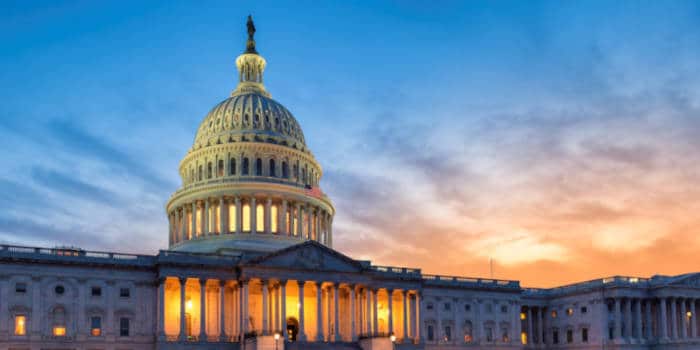
A former congressional staff member who was involved in drafting the Dodd-Frank financial reform law is pushing back against the legal arguments that are currently being used to justify sports prediction markets in the United States.
“Nobody Once Mentioned Sports Gambling”
Amanda Fischer, currently policy director and chief operating officer at Better Markets, said Congress never intended for the Commodity Futures Trading Commission (CFTC) to oversee sports-related event contracts when lawmakers passed the sweeping Dodd-Frank Wall Street Reform and Consumer Protection Act in 2010.
Speaking during a recent webcast hosted by the Indian Gaming Association, Fischer said the idea of federal oversight for sports wagering products was never part of the conversation during negotiations around the law.
“I was around for the Dodd-Frank Act in 2010 as a staffer and sat in constant meetings and congressional hearings, and nobody once mentioned sports gambling in the oversight framework,” Fischer said. “If that was the intent of Congress, it would have been discussed.”
Prediction market operators like Kalshi and Polymarket have argued that the CFTC has authority over sports event contracts, sparking legal disputes with states and strong opposition from tribal gaming groups as well as gambling industry leaders.
Overstretched and Lacking Resources
Fischer argued that the CFTC is already overstretched and lacks the resources needed to effectively oversee rapidly expanding prediction markets.
“The CFTC at its high-water mark had 600 staffers,” she explained. “They oversee about $500 trillion in financial and commodity derivatives and have probably 150 enforcement staff in total.”
She warned that the agency risks losing focus on its core responsibilities, especially after criticism that regulators failed to act quickly enough before the 2008 financial crisis.
Recent controversies involving prediction markets have intensified those concerns. Fischer pointed to reports of traders allegedly profiting from sensitive geopolitical developments, including the reported capture of Venezuelan President Nicolás Maduro and the death of Iranian Supreme Leader Ali Khamenei.
“The Maduro issue raises more questions than answers,” Fischer said, while also criticizing what she described as weak enforcement surrounding offshore prediction platforms.
She specifically questioned whether Polymarket properly blocked US users after a 2022 regulatory settlement required tighter controls. Fischer also criticized CFTC Chair Michael Selig, saying that the agency seems to have adopted a favorable stance toward prediction markets before establishing clear rules or legal authority.
Melanie specializes in analyzing legalities and the ongoing development of land-based gaming infrastructure. She tracks zoning regulations, casino expansions, and the legislative hurdles of resort development. Her sharp insights guide operators through the complex permitting processes required to build tomorrow’s premier brick-and-mortar gaming destinations.

More Articles


Casino
May 12, 2026
New Jersey Bill Targets Sportsbook Bonus Offers









Casino
May 11, 2026
Conquer Casino Launches UK-Facing iGaming Platform



Industry
May 8, 2026
Michigan Hits Pause on Betting Tax Hike