March 17, 2026
5 min read
Fact-checked by Angel Hristov
Alina Famenok: “Upskilling is no longer optional”
"What matters most to me is not the scale itself, but how that scale was achieved"
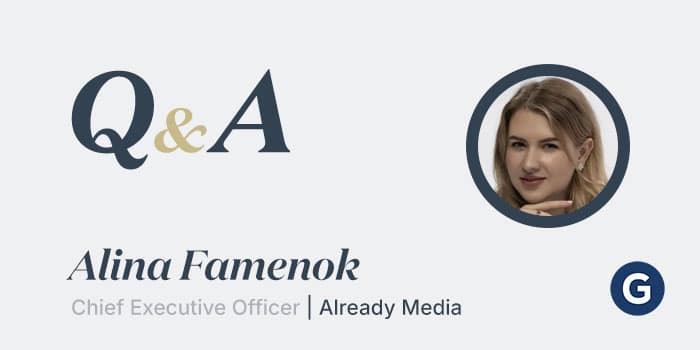
Alina Famenok spoke exclusively to Gambling News on what modern leadership looks like in the iGaming industry, and what comes next for her after a successful stint as CEO of Already Media
Q: You’ve come to represent a new generation of iGaming leaders. Could you tell us a little about your approach and how it differs from what came before?
I’m not sure I ever set out to represent a “new generation,” but I do recognise that my approach differs from what has come before. iGaming has long been quite closed and opaque. Things were done a certain way, and if you weren’t a member of the club, your voice wouldn’t be heard. For a long time, iGaming operated behind closed doors. That model is becoming harder to sustain.
From the beginning, I wanted to lead differently, being open not only about what we were doing, but also about the reasoning behind it.
My view has always been that leadership is human first. That means being open about complexity, about difficult decisions, and sometimes about uncertainty. Paradoxically, that openness has built far more trust, both inside organisations and across the wider market. For me, that combination of performance, trust, and humanity is what modern iGaming leadership should look like.
Q: You left Already Media at the end of last year, after a successful five-and-a-half years as CEO. Why the change, and how do you reflect upon your time at Already Media?
It felt like time for a new challenge. After five-and-a-half years, we had reached a natural milestone in the company’s evolution. I’m immensely proud of what we built together.
When I joined, we were a team of 13 people with strong ambition but limited structure. By the time I stepped away, Already Media had grown into an international organisation of more than 370 employees, ranked 17th in the EGR Power Affiliates list, operating across multiple markets with clear processes and leadership layers.
What matters most to me is not the scale itself, but how that scale was achieved. We grew sustainably. We built systems that could be replicated, teams that could operate independently, and leaders who could inspire others without constant central direction.
For me, the most rewarding outcome is that the company does not depend on any single individual to function or progress. Seeing people I worked with grow into confident leaders, capable of taking responsibility and driving the business forward, is the real legacy of that period.
What comes next for you?
I can’t share too many specifics just yet, but the direction is very clear to me. The industry is entering a phase of much greater complexity. Regulation, technology, competition and a more informed user base are all accelerating at the same time.
In that environment, success will not belong to those with the most traffic or the loudest marketing. Those advantages are increasingly fragile. Instead, we need to think about empowering leaders who have a deep understanding and can think systemically while adapting quickly to a changing market. The next phase of iGaming will belong to companies that build thinking organisations, not just traffic machines.
This is why my next chapter will be focused on strategic development and education. Upskilling is no longer optional, but rather a baseline requirement for sustainable growth and relevance.
I’m particularly interested in practical education and the mindset needed to operate in a fast-moving, regulated digital industry. Helping individuals and organisations build that capability is where I see the greatest impact going forward. I’m excited to share more about this shortly.
Q: What skills or mindsets do you believe will become essential for iGaming professionals over the next five years, regardless of role or vertical?
The most important shift will be from functional expertise toward that deeper understanding. The industry is no longer a collection of isolated roles such as marketing, product, compliance or operations. It is an interconnected environment shaped simultaneously by tech, regulation and much more. Professionals who understand only their own function will struggle to make strong decisions in that context. The industry will increasingly reward people who can think beyond their job title/ Specialists will still matter, but the advantage will belong to those who understand how the whole system works.
Strategic thinking will become essential at every level, not just leadership. People will need to understand how their work connects to user value, risk, regulation and long-term business sustainability. Alongside this, product thinking will be critical, even outside product roles. I’m talking about a clear sense of the user, the experience and the real value being created.
Upskilling is not only about knowledge. It’s about responsibility for the decisions you influence.
The mindset shift is equally important. Adaptability, curiosity and comfort with ambiguity will matter more than certainty. The industry is evolving too quickly for static expertise to remain relevant for long.

Jerome brings a wealth of journalistic experience within the iGaming sector. His interest in the industry began after graduating from college, where he regularly participated in local poker tournaments. This exposure led him to the growing popularity of online poker and casino rooms. Jerome now channels all the knowledge he's accrued to fuel his passion for journalism, providing our team with the latest scoops online.
Previous Article

Insider
March 17, 2026
Bally’s Corp. Publishes Preliminary 2025 Report, Outlining Year of Strategic Progress


Must Read
More Articles



Legal
March 17, 2026
Whatnot Faces Claims Over Randomized Pool Card Games




Casino
March 17, 2026
Minnesota Senators Seek Ban on Online Sweepstakes Casinos


Business
March 16, 2026
Bally’s Moves Forward with Las Vegas Expansion Plans


Business
March 16, 2026
Analyst Urges Higher Bid in Potential Caesars Takeover