December 15, 2025
3 min read
Fact-checked by Stoyan Todorov
Escaping Reality Via Gambling Leads to Addiction
The upgraded Gambling Motives Questionnaire has determined that the act of trying to escape the daily hassle through gambling is likely to trigger gambling addiction
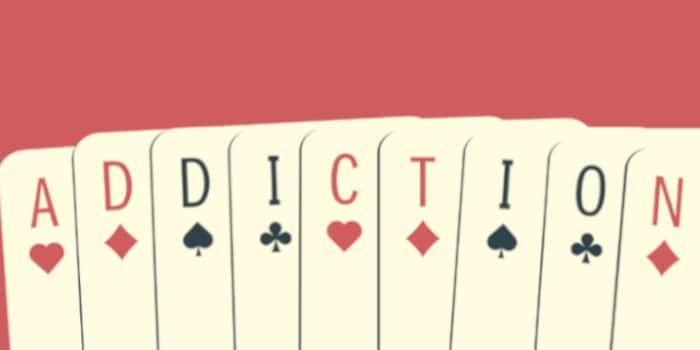
A global research team has updated the Gambling Motives Questionnaire (GMQ), which is a standard scale that determines the reasons behind a person’s gambling habits.
The freshly improved GMQ-R-27 is ready to assess a series of motives that have not yet been covered by the original form of the GMQ. The list includes escapism, which is defined as relying on imagination or various forms of entertainment as a means of diverting one’s thoughts from the less pleasant aspects of life.
While past studies have pointed to coping, socializing, and pleasure as the main reasons behind most people’s gambling, escapism deserves a lot more attention as it is commonly tied to problem gambling.
As explained by Université de Montréal’s psychology professor, Beáta Bőthe, individuals who gamble to escape “their real lives, their worries, stress, and negative emotions,” are more prone to end up having a gambling disorder.
The professor, a researcher at Quebec’s Interdisciplinary Research Centre on Intimate Relationship Problems and Sexual Abuse, took part in the study now available in the Comprehensive Psychiatry journal.
Escapism, a “Trivial Motivation”
“Escapism isn’t a trivial motivation,” explained Bőthe, but a “form of self-medication” that resembles alcohol and other types of behaviors labeled as high-risk, since it “provides emotional relief.”
Since gambling can provide a much-needed break and a temporary sense of joy, it is easy to fall into its trap in the long run, believes the professor. “If gambling is the only thing that makes a person feel better, it can eventually become compulsive,” Bőthe explained.
The new findings also emphasize the need to accurately interpret the genuine reasons pushing a person to play when attempting to treat an addiction.
Bőthe strongly believes in the use of “alternative strategies” like mindfulness and cognitive behavioral therapy as ways of breaking the “vicious circle” of using escapism and the need to tackle negative emotions as arguments to engage in gameplay.
What About Social Gaming?
Surprisingly or not, social forms of gambling, including engaging in games of chance with family members or friends to have fun or simply connect, are not equally addictive.
On the contrary, says Bőthe, players may experience the opposite effect, even though, at the moment, the available evidence is not very clear.
While there are studies that have discovered that gambling with friends may lower the odds of addiction, with excesses limited by the nature of the social context itself, there are also findings suggesting the “peer pressure” phenomenon may be a real thing in gambling.
In other words, gamblers may influence their friends to get involved in risky behaviours, with special emphasis on the fact whether the group prefers high-stakes gaming or risk-taking.
In the meantime, one thing is for sure: there is a burning necessity to re-evaluate and redefine the way experts assess social motives behind gambling.

After finishing her master's in publishing and writing, Melanie began her career as an online editor for a large gaming blog and has now transitioned over towards the iGaming industry. She helps to ensure that our news pieces are written to the highest standard possible under the guidance of senior management.
Previous Article

Industry
December 15, 2025
ACR Poker’s Mini Online Super Series Offers $2.5m in Guarantees


Must Read
More Articles




Casino
March 13, 2026
Indiana’s Governor Signs Sweepstakes Ban into Law



Casino
March 13, 2026
WWE Slot Game “Road to Gold” Debuts on Fanatics Casino






Casino
March 12, 2026
Monmouth Park Casino Resort Expansion Plan Gains Support