
February 26, 2026
3 min read
Fact-checked by Angel Hristov
Kalshi Sues Utah Officials in Preemptive Effort Against Prediction Market Crackdown
The boundaries between federally supervised exchanges and state gambling bans remain blurred, meaning that this new legal challenge may become another test
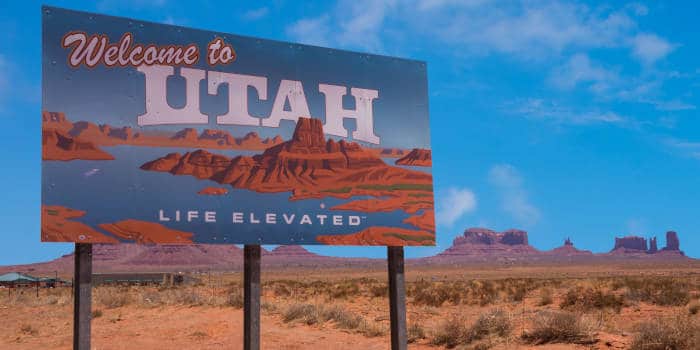
Prediction platform Kalshi has opened a fresh challenge in federal court to prevent what it believes will be swift enforcement action by Utah officials. The legal dispute mirrors similar lawsuits in other states and aims to determine which entity has jurisdiction over the fast-growing world of event-based trading. Kalshi is seeking an injunction to prevent state authorities from taking steps to restrict access to its platform.
Kalshi Insists States Have No Authority over Its Offerings
The prediction platform has filed a lawsuit against Utah Governor Spencer Cox and Attorney General Derek Brown, arguing that recent public remarks from both men signal that the state is preparing to move against its platform. According to the complaint, the officials’ statements could indicate upcoming enforcement action prohibiting the company from offering contracts tied to real-world outcomes, even through its federally regulated exchange.
Defendants have repeatedly represented that they believe Kalshi is operating unlawfully under Utah anti-gambling laws.
Kalshi lawsuit
Utah’s position is rooted in its constitution, which prohibits nearly all forms of gambling. Lawmakers have reaffirmed that stance in recent months. House Bill 243, now under consideration, would amend the state’s criminal code to classify proposition-style wagers as illegal gambling. While the measure focuses on bets usually tied to individual player performance, its language is broad enough to encompass sports-related prediction markets.
Kalshi insists that its contracts do not constitute conventional wagers. The company frames its offerings as financial instruments under federal supervision. Kalshi argues in its filing that the Commodity Futures Trading Commission (CFTC) has exclusive regulatory power over futures and swaps markets, meaning that Utah laws should not apply to event contracts.
The Legal Situation Remains Murky
Kalshi’s complaint focuses on public comments from Cox suggesting that prediction platforms are operating unlawfully within the state. The company also drew attention to an opinion piece by Brown in which the attorney general argued that prediction markets violate Utah law and indicated that his office was prepared to take enforcement action. Kalshi claims that Brown’s statements pose a credible danger that justifies preemptive litigation.
Courts in other states have reached differing conclusions regarding this matter. Judges in Tennessee and New Jersey recently granted preliminary relief that shielded Kalshi from similar state-level enforcement. However, authorities in Massachusetts and Nevada have scored significant court victories against prediction platforms, perpetuating the legal ambiguity surrounding prediction markets.
The ongoing regulatory conflict has drawn in industry stakeholders. According to the American Gaming Association, prediction markets often bypass age verification requirements and responsible gaming mechanisms required for licensed operators. Tribal leaders and state gaming agencies have voiced similar concerns, arguing that event contracts tied to sporting results risk eroding established gaming compacts and oversight systems.

Deyan is an experienced writer, analyst, and seeker of forbidden lore. He has approximate knowledge about many things, which he is always willing to apply when researching and preparing his articles. With a degree in Copy-editing and Proofreading, Deyan is able to ensure that his work writing for Gambling News is always up to scratch.
Previous Article

Prediction Markets
February 26, 2026
Illinois Player Won $3M from Mega Millions - Owner Hasn’t Stepped Forward


Must Read
More Articles


Casino
April 10, 2026
No, Massachusetts Won’t Ban Social Casinos



Lottery
April 10, 2026
Missouri Lottery Win Worth $274K Leads to Home Ownership



Lottery
April 10, 2026
Jersey Cash 5 Awards $590,007 Jackpot to Single Winner

Casino
April 10, 2026
Ex-Lawmaker Seeks Return of $800K Pension in Court

Casino
April 10, 2026
Trump Heads to Vegas to Push “No Tax on Tips” Plan